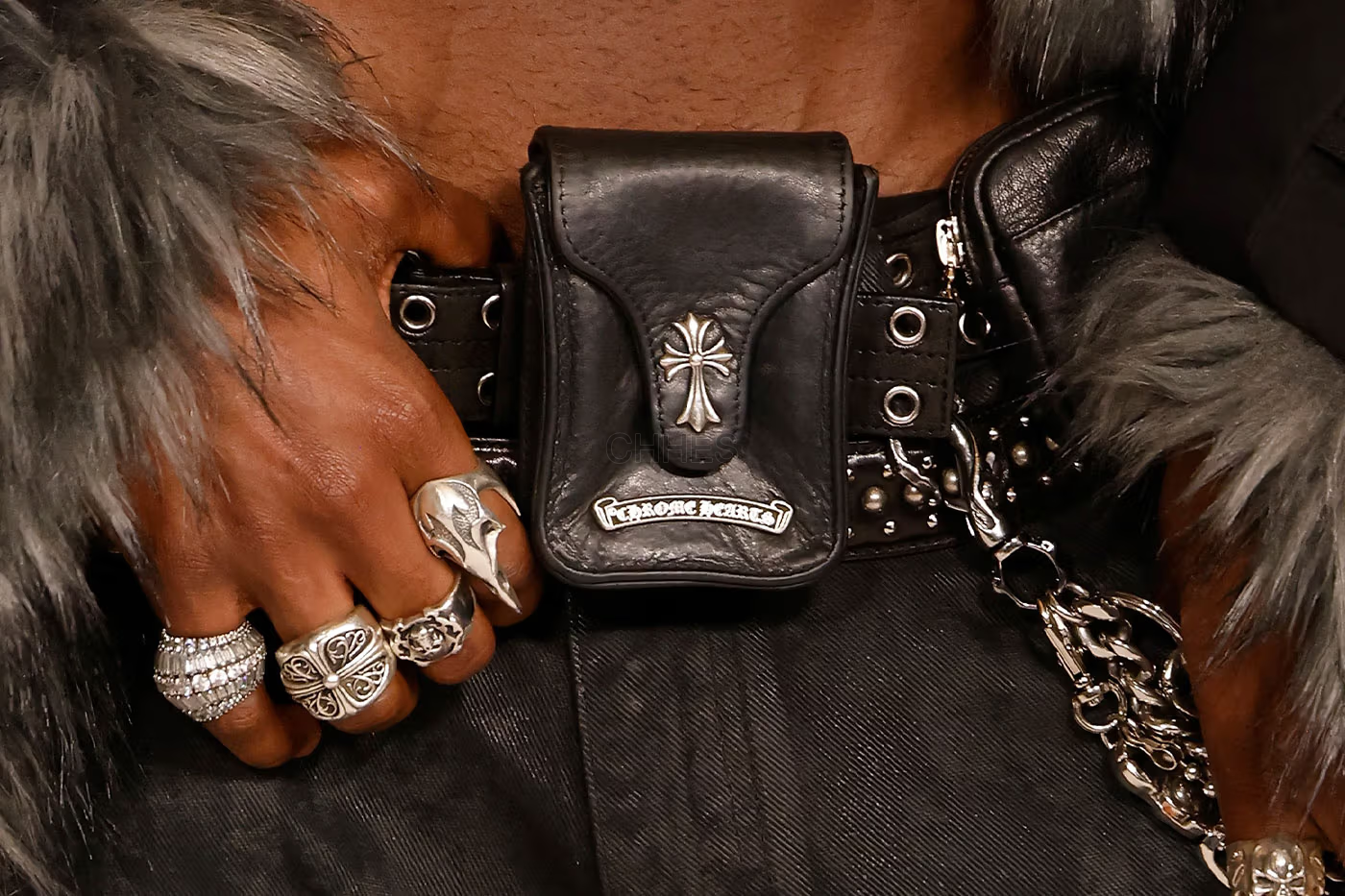
Chrome Hearts has officially filed a lawsuit against Nordstrom in the United States Central District Court of California
Published: 2026-07-11 20:30:06
Chrome Hearts has officially filed a lawsuit against Nordstrom in the United States Central District Court of California
The luxury brand accuses the retail giant of trademark infringement and counterfeiting involving its iconic cross design accessories
The legal dispute highlights the complex balance between purely decorative ornamentation and protected source-identifying trademarks.
Chrome Hearts officially takes legal action against Nordstrom, with the Los Angeles-headquartered luxury brand claiming that a series of accessories illegally copied its most recognizable design elements. In the lawsuit filed on June 4 in the United States District Court for the Central District of California, Chrome Hearts accuses the retail giant of trademark infringement, product counterfeiting, false designation of origin, and unfair competition. At the heart of the dispute is the sale by Nordstrom of belts and jewelry featuring cross-shaped patterns closely associated with the high-end brand's heavy metal aesthetic.
Beyond the typical luxury industry dispute, this lawsuit raises a broader question: how trademark law treats design features that serve both decorative and source-identifying functions. Chrome Hearts does not claim exclusive rights to all cross imagery. Rather, the brand specifically seeks to enforce federal registrations covering the CH Cross and CH Plus designs. According to the company, decades of continuous use, extensive celebrity adoption, and widespread advertising have firmly established these specific patterns as recognizable trademarks in consumers' minds.
This case highlights the delicate balance courts must achieve when evaluating whether design features serve as genuine indicators of source or merely as aesthetic decoration. The outcome of the dispute may hinge on whether consumers genuinely perceive these specific crosses as Chrome Hearts' hallmarks, and whether Nordstrom's use creates confusion regarding brand attribution. Ultimately, the ruling could help define the legal boundaries between protected fashion trademarks and general decorative design vocabulary.